Product No. QM3001A

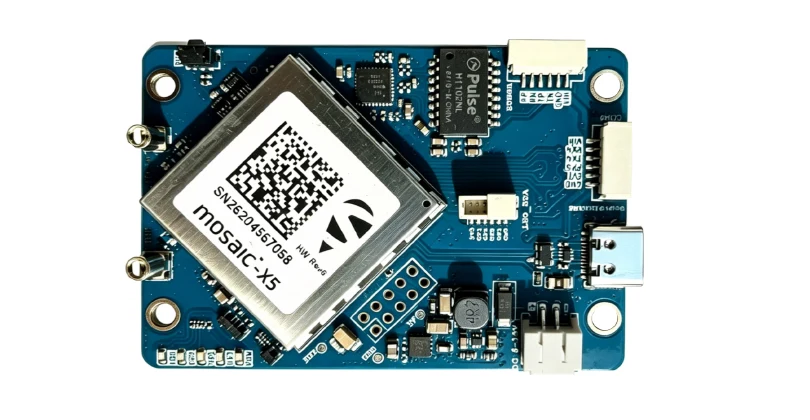
BASE-X5B · All-in-One Industrial RTK Base Station Board

Rapidly deploy self-hosted differential base stations with direct RTCM network broadcasting, wide DC input and nanosecond-level timing — no host PC or extra modem in the loop.

Powered by Septentrio Mosaic-X5 Centimeter-Level RTK Precision Native Ethernet & NTRIP Server Nanosecond-Level PPS

Product Overview

Traditional RTK boards need an external controller, a separate network module and extra power regulation before they can serve as a base station at all.

The BASE-X5B removes that stack. It puts the survey-grade Septentrio Mosaic-X5 core together with native Ethernet isolation, an embedded NTRIP server and complete onboard power management on one miniature board — a plug-and-play RTK base station that broadcasts corrections the moment it is powered.

Core Hardware

Multi-frequency RF front-end, hardware RTK solver and built-in anti-jamming algorithms on a miniature carrier board — the positioning engine is the module, not a host-side computation.

Wide-Voltage Power

DC 5–15V ultra-wide input with onboard multi-stage DC-DC / LDO regulation outputting clean 3.3V / 5V for stable 24/7 field operation.

Precision Timing

Nanosecond-level PPS output and dedicated multi-frequency active antenna RF seat with antenna power supply for GNSS+IMU fusion and time-sync gateways.

Deployable Node

A lightweight, independently deployable industrial GNSS edge node — positioning, differential distribution, data transmission and timing in one board.

Core Competitive Advantages

Five capabilities decide whether a base board survives a real deployment: what it tracks, how tightly it fixes, how it handles interference, how it distributes corrections, and how little it asks of the host.

Full Constellation & Multi-Frequency Tracking

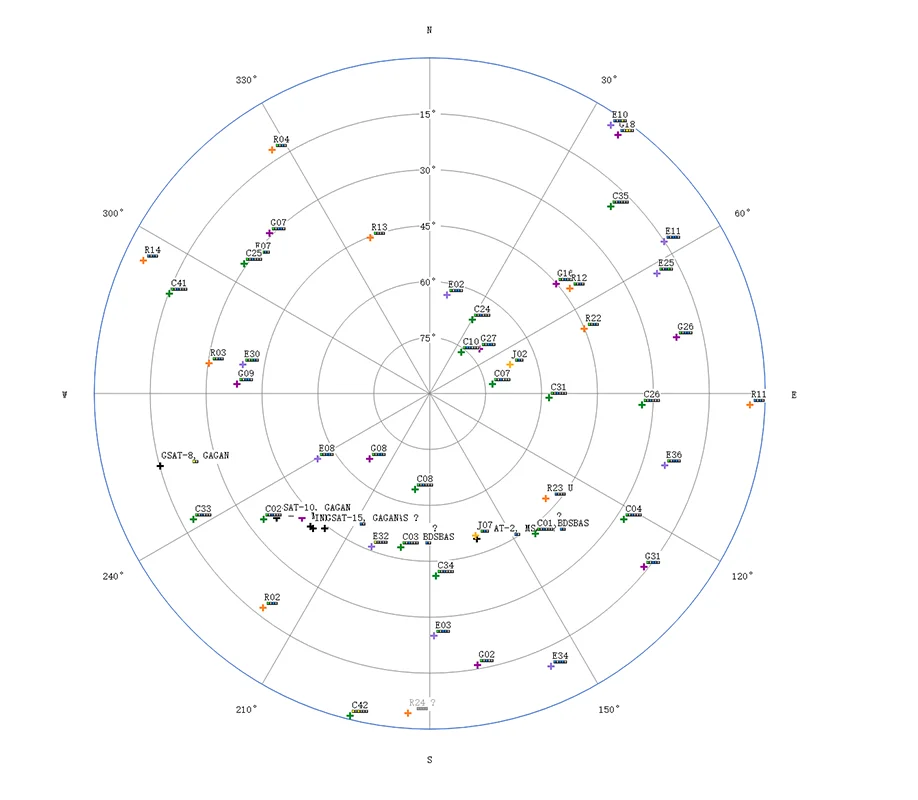
448 parallel hardware channels covering GPS, BeiDou, Galileo, GLONASS, QZSS and NavIC. Multi-frequency observation suppresses ionospheric error and multipath, so the board keeps lock under heavy foliage, in urban canyons and beside EMI-heavy machinery.

Centimeter-Level RTK & High-Hz Output

Up to 100 Hz output at 6 mm + 0.5 ppm horizontal / 10 mm + 0.8 ppm vertical. Switchable Base / Rover operation and PPP convergence let one board serve both ends of a correction network.

AIM+ Anti-Jamming & Interference Resistance

Septentrio AIM+ RF anti-jamming, RAIM+ integrity monitoring and LOCK+ vibration-robust tracking actively mitigate RF noise, spoofed signals and mechanical vibration — the reason the fix survives machine halls, radio masts and a moving chassis.

Native NTRIP & Network Isolation

Onboard Ethernet with an industrial Pulse H1102NL isolation transformer runs a standalone NTRIP Server or Client, streaming RTCM corrections to rovers, unmanned platforms and survey terminals directly over LAN or WAN.

Ultra-Low Power & Industrial Integration

Typical 0.6 W draw from a 5–15 V DC wide input with onboard 3.3 V / 5 V LDO rails, plus NMEA-0183, RTCM3 and SBF output on a standard UART / PPS / GPIO header — drop it into a robot chassis or data radio with no extra power stage.

BASE-X5B Mosaic-X5 Industrial GNSS RTK Base Board

Technical Specifications

Core Module Septentrio Mosaic-X5 (Belgium Original) Survey-grade multi-frequency GNSS RTK module for high-precision base stations and harsh industrial outdoor scenarios
Hardware Channels 448 parallel receiving channels Full-band signal reception with multi-frequency observation for ionospheric and multipath suppression
Satellite Systems GPS, BeiDou, GLONASS, Galileo, QZSS, NavIC Compatible with SBAS (WAAS / EGNOS / MSAS / GAGAN / SDCM)
Frequency Bands GPS L1/L2/L5 · BeiDou B1C/B2a/B3 · Galileo E1/E5a/E5b/E6 · GLONASS G1/G2/G3 Full-band coverage for maximum signal diversity and robust positioning
RTK Positioning Accuracy 6mm + 0.5ppm (H) / 10mm + 0.8ppm (V) Centimeter-level RTK precision (6 mm + 0.5 ppm) for high-end engineering work
Data Update Rate Up to 100Hz · latency < 10ms High-frequency output for high-speed robots and surveying
Operation Modes RTK Base · RTK Rover · Single Point · PPP Switchable modes from single-point to PPP precise point positioning
Interfaces Ethernet (NTRIP) · USB-C · Multi-UART · GPIO Native Ethernet for NTRIP Server/Client; USB-C for power, config and logs; reserved UART/PPS/GPIO for integration
Timing & Sync Nanosecond-level PPS output High-precision PPS for multi-sensor time alignment and GNSS+IMU fusion navigation
Power Input DC 5–15V · typical 0.6W / max 1.1W Ultra-wide input with onboard 3.3V/5V regulated output for field, vehicle and factory deployment
Anti-Interference AIM+ · RAIM+ · LOCK+ RF anti-jamming, integrity monitoring and anti-vibration tracking for continuous lock under EMI
Protocols NMEA-0183 · RTCM3 · SBF · RINEX Full industrial standard protocol support for base station and rover interoperability
Working Temperature −40°C ~ +85°C Industrial wide temperature range for long-term outdoor operation

Powerful Interfaces & NTRIP Differential Distribution

Ethernet Port (Core Highlight) Pulse H1102NL isolated · NTRIP Server/Client Industrial network isolation transformer; works directly as an NTRIP RTK base station broadcasting RTCM over LAN/Internet
USB-C High-Speed Interface Power · Config · Firmware · Logs Universal mainstream interface for rapid power supply, parameter configuration, firmware upgrade and log export
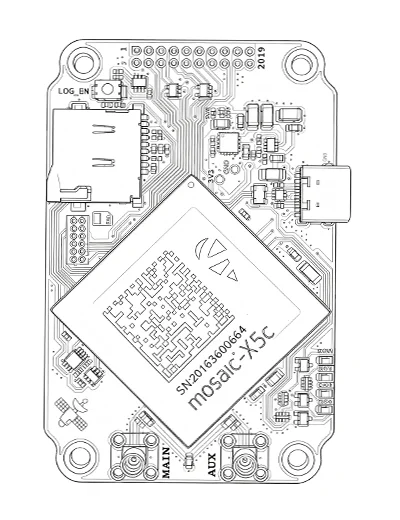
Multi-UART & Peripheral Pins TX · RX · PPS · GPIO Reserved complete TX/RX/PPS/GPIO pins for direct connection with MCU, data radios, sensors and robot chassis
Local Config

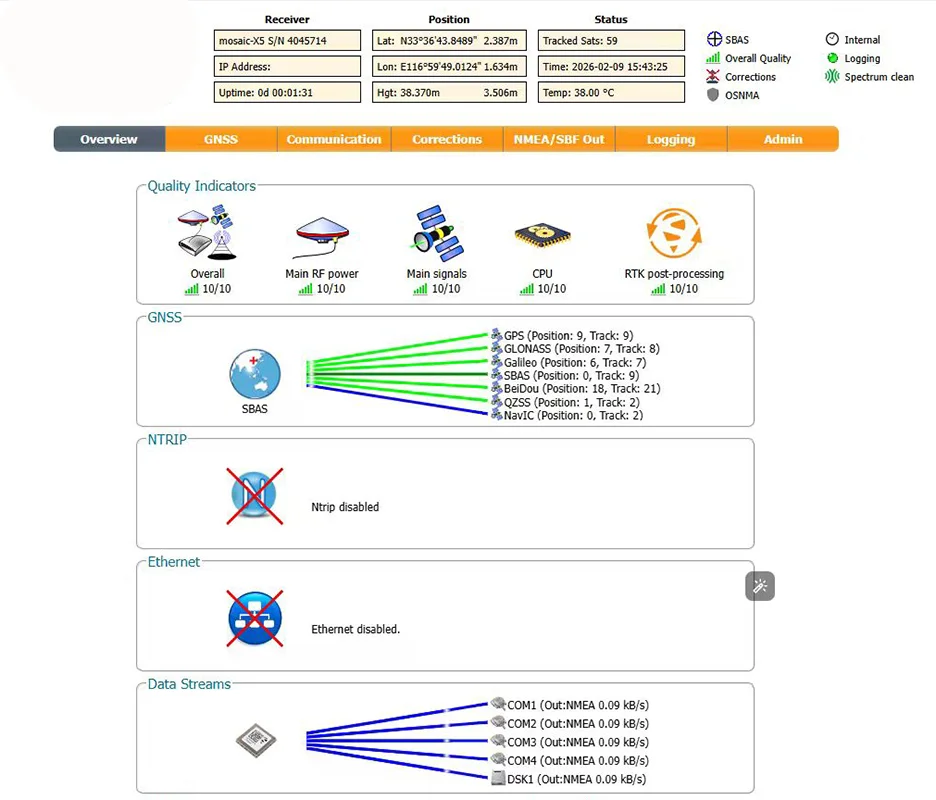
Quick Web Configuration Tool

Configure your module locally in the browser — no cloud account, no software install.

Step 1 - connect module to browser
Step 2 - tune streaming and output
Step 3 - validate and export settings

Industrial GNSS
Application Scenarios

Four deployments where owning the reference beats renting corrections. Comparing boards? BASE-G5 is the ultra-compact option in the same Septentrio family, and BASE-X5A adds an integrated 6-DOF IMU for base and rover roles. Comparing the two Septentrio mosaic cores? See the mosaic-G5 vs Mosaic-X5 comparison.

  • 01

    Construction & machine control

    A yard or site base that broadcasts RTCM to every excavator, dozer and rover on site, with no dependence on mobile coverage or a third-party CORS subscription.

  • 02

    Telecom & industrial timing

    Feeds nanosecond-level PPS to ground-station, substation and test-bench clocks, replacing a dedicated timing appliance.

  • 03

    Marine & offshore survey

    A shore base streams corrections over WAN to survey vessels and USVs, so the vessel needs neither a local radio link nor a second receiver.

  • 04

    Autonomous fleets & site retrofits

    One base serves machines delivered with RTK and machines upgraded afterwards: corrections reach every autonomous hauler, dozer and retrofit kit on site over NTRIP or the isolated Ethernet port, with no radio per machine.

Surveyor working with an RTK GNSS receiver on a tripod
Satellite ground-station dish antennas
Yacht under sail at sunset
Buying guide

Technical FAQ

The questions integrators ask before designing in BASE-X5B — answered from the published specification.

What GNSS core does BASE-X5B use, and how many channels does it track?

It is built on the Septentrio Mosaic-X5 (Belgium origin), a survey-grade multi-frequency receiver with 448 parallel channels tracking GPS, BeiDou, GLONASS, Galileo, QZSS and NavIC, with SBAS support.

What RTK accuracy and output rate does BASE-X5B deliver?

6 mm + 0.5 ppm horizontal and 10 mm + 0.8 ppm vertical, with data output up to 100 Hz at under 10 ms latency — enough for high-speed robots as well as static surveying.

Does BASE-X5B work as an NTRIP base station without extra hardware?

Yes. The onboard isolated Ethernet port (Pulse H1102NL) runs a native NTRIP server/client, so the board broadcasts RTCM3 corrections over LAN or the internet directly — no separate caster PC, and no mobile coverage needed on site.

How is BASE-X5B powered, and what does it draw?

A wide DC 5–15 V input, drawing 0.6 W typical and 1.1 W maximum, with onboard 3.3 V / 5 V regulated output for field, vehicle and factory deployment.

Which interfaces and protocols does BASE-X5B expose for integration?

Ethernet (NTRIP), USB-C for power / configuration / firmware / logs, and multi-UART pins brought out as TX, RX, PPS and GPIO for MCUs, data radios, sensors and robot chassis. Protocols: NMEA-0183, RTCM3, SBF and RINEX, plus nanosecond-level PPS for time alignment.

What temperature range and interference protection does it have?

−40 °C to +85 °C industrial operating range, with AIM+ RF anti-jamming, RAIM+ integrity monitoring and LOCK+ anti-vibration tracking for continuous lock under EMI.

Can BASE-X5B act as a multi-base GNSS station with its own NTRIP server?

Yes. The onboard isolated Ethernet port runs a native NTRIP server, so the board publishes its own RTCM corrections without a PC or extra hardware, and several units can feed one multi-base GNSS network. It is built on the Septentrio Mosaic-X5 with 448 parallel channels and full multi-frequency observation.

What are the shipping terms, the freight and the delivery time?

Goods are quoted FOB Shanghai Airport. The default carrier is DHL Economy, freight is prepaid by the seller and added to the invoice, and delivery to the airport is free of charge. Air freight takes 7–10 days and express courier 3–5 working days, depending on the destination region and the carrier’s official tracking. Main markets are Europe, the Middle East, the USA and South America; shipping is worldwide.

How are volume discounts and special projects handled?

Discounts are granted at the seller’s discretion according to the project volume. For special projects and long-term partners, terms and pricing are negotiable — tell us the expected volume and the deployment plan and we will quote accordingly.

What is your quality-assurance and return policy?

Every unit carries a 2-year warranty from the shipment date: defects caused by the product itself are repaired or replaced free of charge, and human damage is charged at parts cost only. Mechanical spare parts are guaranteed to be available for 15 years (cellular modules and batteries follow the upstream supplier’s policy). International returns and replacements follow a written RMA process — request within 15 business days, and never ship goods back before we approve the return and issue an RMA number. Duties, freight and other return costs are allocated according to the cause, and a return whose total cost exceeds 15% of the goods’ value may be refused or settled locally instead. Read the full quality-assurance and return policy.